
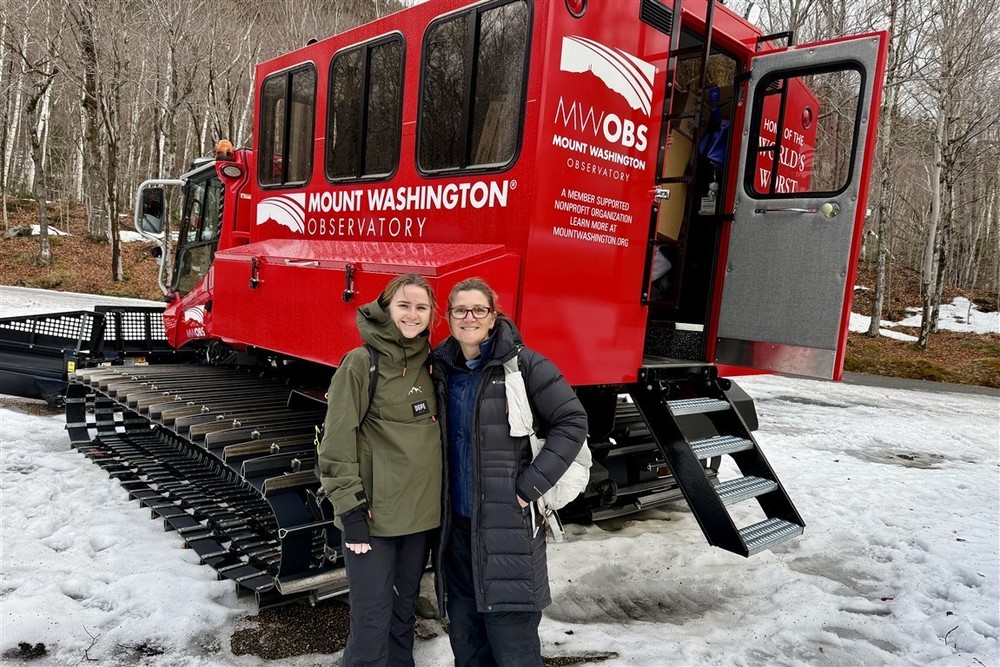
WORCESTER, MA — Two Worcester East Middle School (WEMS) science teachers recently traveled to the 6,288-foot summit of Mount Washington as part of the Arctic Wednesday program.
On Wednesday, March 11, educators Megan Rogozenski and Colleen Cutting joined this winter professional development initiative, offered by the Mount Washington Observatory, to study mountain meteorology and advanced weather observation techniques directly from the observatory’s team. Traveling to the summit in a snowcat, they spent the day exploring rapidly changing and often severe weather conditions.
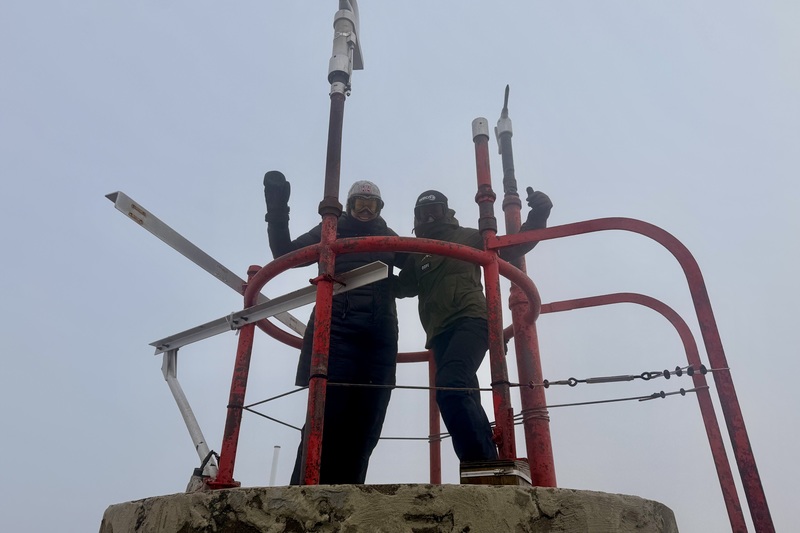
Photo Caption: Megan Rogozenski (left) and Colleen Cutting (right) examine weather instrumentation at the 6,288-foot summit of Mount Washington. (Photo submitted)
Bringing the Summit to the Classroom
The trip gave students a real-world connection to topics studied in middle school science, including extreme weather, air pressure, climate, and atmospheric forces. In preparation for the trip, the teachers tracked summit forecasts, compared them to Worcester’s weather, and examined how elevation affects temperature, wind speed, and air pressure.
Students followed along virtually, asking questions about how scientists measure weather in extreme environments and observing how conditions can change dramatically over short distances. The teachers documented data and shared it with students, allowing them to analyze authentic information from one of the country’s most well-known weather stations.
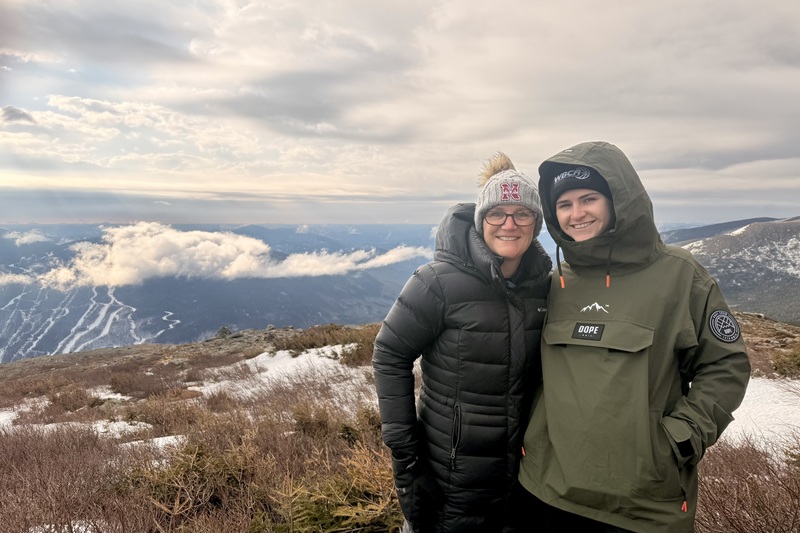
Photo Caption: WEMS science teachers Megan Rogozenski (left) and Colleen Cutting (right) at the summit of Mount Washington. (Photo submitted)
Science Beyond the Classroom
Arctic Wednesday gave WEMS teachers the chance to bring an extraordinary experience to students who might never visit such an extreme environment. Through live streaming, photos, stories, and data from the summit, students were able to see that science happens far beyond the walls of the classroom.